You can share
- Share to Facebook
- Share to Google+
- Subscribe to our
- Share to Linkedin
- Share to Twitter
You can share

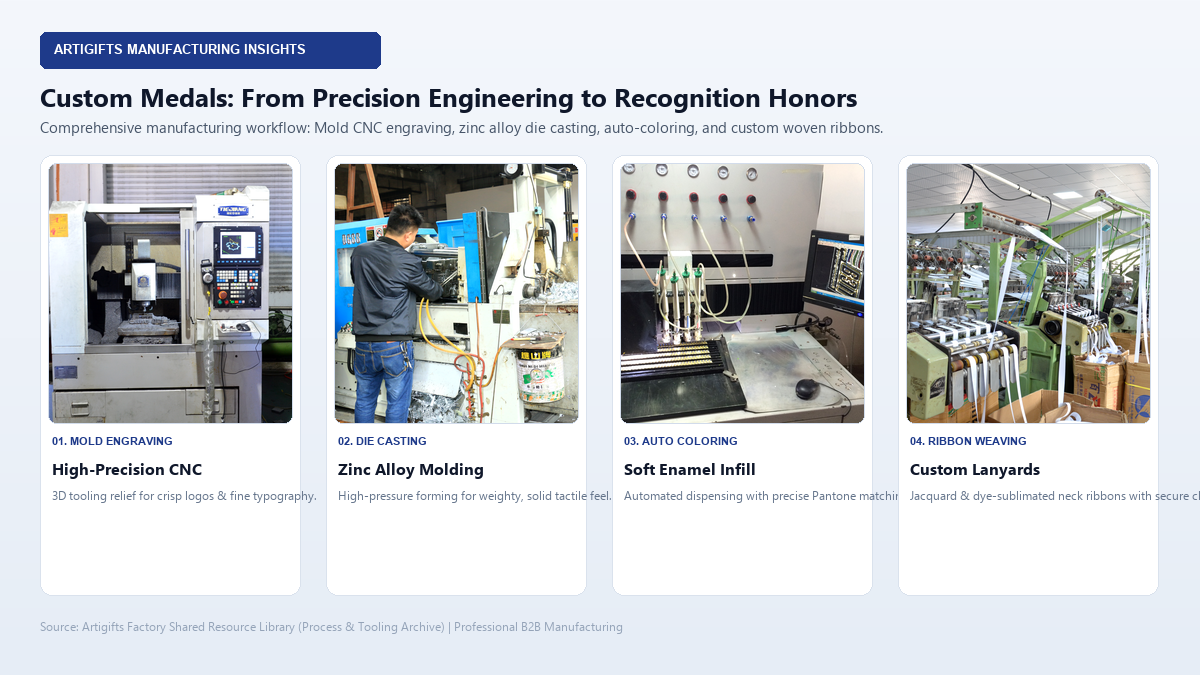
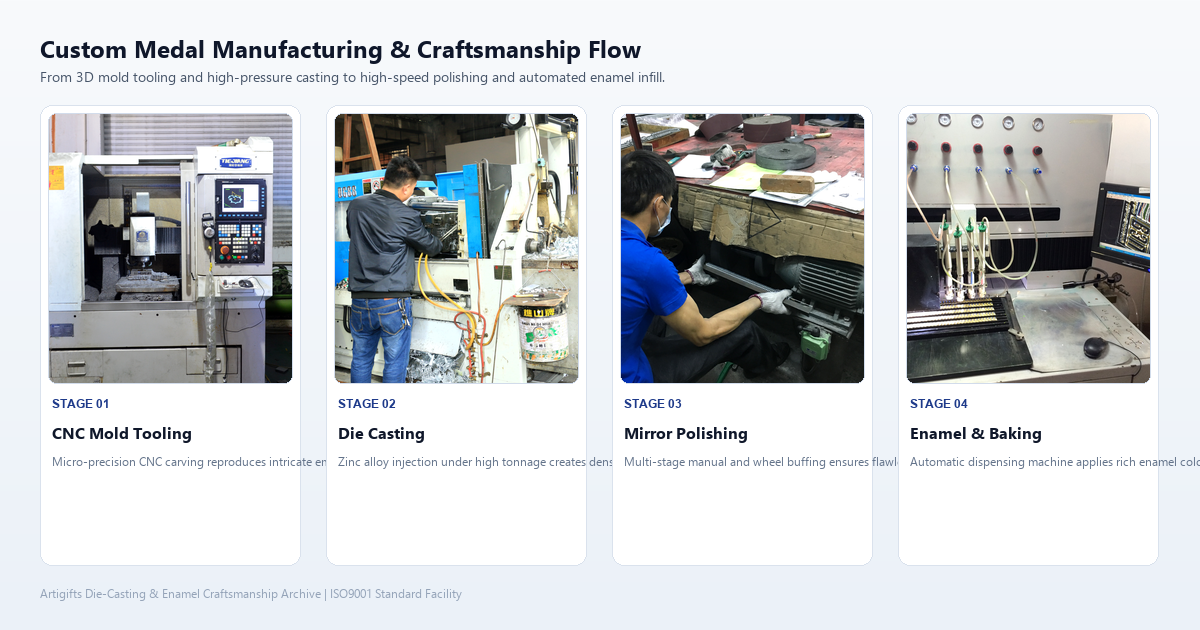
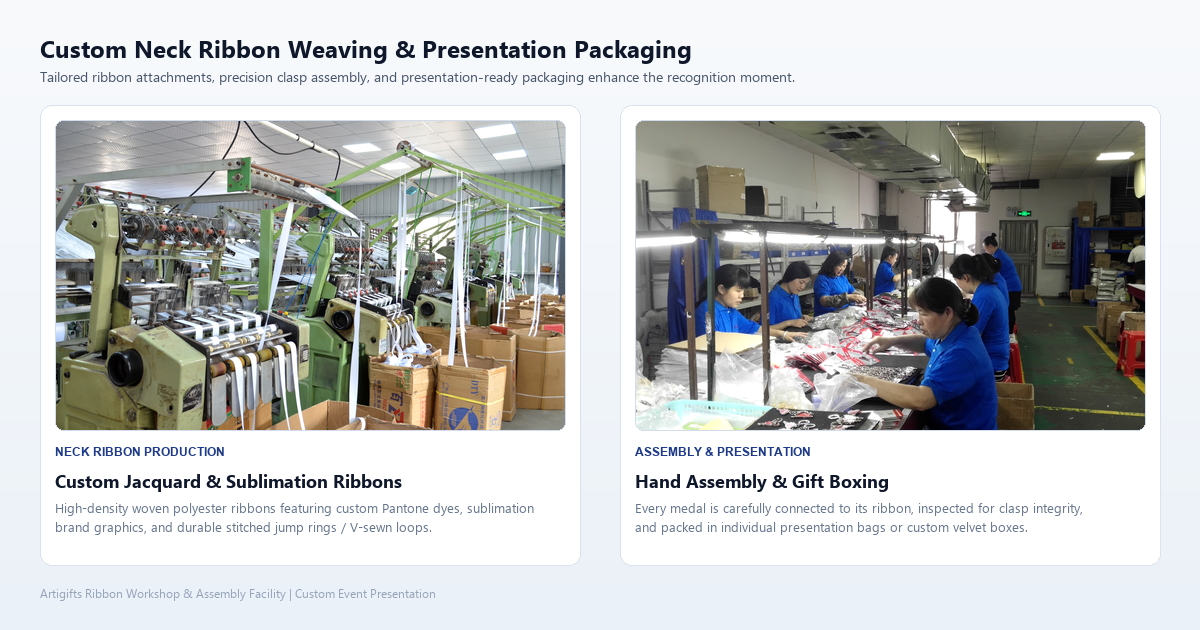
Suggested slug: `custom-medals-employee-recognition-event-experiences` Meta title: Custom Medals for Employee Recognition and Events Meta description: Learn how custom medals can support employee recognition and event experiences, with practical guidance on meaning, design, durability, proofing and procurement. Featured image: `custom-medals-employee-recognition-event-experiences.png` Featured image alt text: Step-by-step manufacturing of custom recognition medals: CNC mold engraving, zinc alloy die casting, soft enamel infill, and neck ribbon weaving from Artigifts workshop
Custom medals can support employee recognition and event experiences when they represent a specific achievement, milestone or shared identity—not when they are treated as interchangeable giveaways. Recent promotional-products and incentive-industry research points to a similar buyer challenge: organizations are managing tighter budgets while recipients expect merchandise to feel useful, intentional and emotionally relevant.
For procurement teams, the practical answer is to design the medal around the recognition moment first, then verify the product, decoration, presentation, documentation and delivery requirements before approving a bulk order.
The value of a medal is not only its material. It is the connection between the object and the moment it records.
PPAI’s Product Power 2026 article reports that 83% of surveyed U.S. consumers say receiving a promotional product makes them feel appreciated, while 72% associate branded merchandise with positive emotions such as pride, belonging or gratitude. The same article says 65% are very likely to keep a branded product for six months or longer, citing durability, design and material as important reasons. These findings describe U.S. consumer research, not a universal employee-recognition result, but they help explain why a well-designed physical object can carry more meaning than a generic item.
PPAI’s 2026 industry research also reports that 60% of buyers cut quantity first when budgets tighten, while only 11% cut customization. In practical terms, this suggests that recognition programs may benefit from fewer, more clearly matched items rather than a larger volume of undifferentiated merchandise. The right choice still depends on audience, award structure, budget and event format.
The Incentive Research Foundation’s IRF 2026 Trends Report adds a program-design perspective. It describes cost pressure, rising expectations and a continuing role for merchandise rewards in incentive programs. The report says planners are increasingly focusing on fewer, higher-value event gifts and that merchandise remains a popular reward, while price volatility and logistics require more measured planning.
A custom medal works best when the organization needs a durable, visible and repeatable symbol for a defined moment. Common use cases include:
The medal should make the recognition logic easy to understand. A recipient should be able to answer: What does this represent? Why did I receive it? Will the design still make sense when I look at it later?
A useful recognition brief normally defines the audience, achievement, award level, presentation moment, expected storage or display method and whether the design will be reused across future program cycles.
Start with the behavior, milestone or event being recognized. A service-anniversary medal, a team achievement medal and an event-participation medal may all be circular metal products, but they should not communicate the same story.
Write the recognition message in one sentence before commissioning artwork. For example, the internal brief might identify a service milestone, a team contribution or completion of a defined event. Keep the wording factual and avoid adding unsupported performance claims.
The design should balance brand consistency with long-term relevance. Buyers should decide which elements are essential:
If a medal will be used across multiple years, avoid making the entire design dependent on a short campaign phrase. A stable base design with a controlled variable—such as an edition, achievement level or event detail—can make future ordering easier while preserving recognition value.
The decoration method should be selected according to the artwork, surface, expected handling and required legibility. Engraving, printing, enamel and other finishes can produce different visual effects and durability considerations. A supplier brief should ask which method is recommended for the exact design and intended use rather than assuming one method is always superior.
For a medal presented on stage, the design must read clearly at a distance. For a keepsake displayed close to the recipient, fine details may matter more. In both cases, proofing is important because a screen design does not automatically predict the final appearance of a physical metal item.
| Decision area | Buyer question | Procurement implication |
|---|---|---|
| Recognition purpose | What achievement or event does the medal represent? | Prevents a generic design from weakening the recognition message. |
| Artwork | Which symbols, wording and identity elements are approved? | Creates a controlled reference for proofing and production. |
| Size and handling | Will the medal be presented, worn, displayed or packed for shipment? | Helps match the format to the recipient experience. |
| Decoration | Which finish is appropriate for the artwork and expected handling? | Reduces the risk of illegible or unsuitable details. |
| Proofing | Will the buyer approve a digital proof or physical sample before bulk production? | Creates a review point before committing to the full order. |
| Packaging | Does the presentation require an individual box, sleeve or coordinated collection? | Aligns protection, presentation and distribution needs. |
| Documentation | Which product, testing or compliance documents are required for the destination market? | Keeps the order aligned with internal and market-specific requirements. |
| Delivery plan | Where will the items be delivered and how will they be distributed? | Helps identify timing, customs and packaging dependencies. |
The correct documents depend on the product, destination and buyer requirements. A supplier should not imply that a general statement or one document automatically satisfies every market.
A medal can make an event feel more complete when it is integrated into the event journey rather than handed over as an unrelated object. Procurement and event teams can consider three points:
The medal does not need to be the most expensive event element. The IRF 2026 report describes a shift toward more selective, higher-value event gifting in the context of cost pressure and rising expectations. For a buyer, the lesson is to coordinate the medal with the wider event budget and recipient experience instead of treating it as an isolated line item.
Some organizations need a medal to work alongside pins, coins, key chains, lanyards or other recognition gifts. In that case, the design brief should define a small visual system:
Artigifts describes its current product scope as including lapel pins, key chains, medals, coins, belt buckles, zinc-alloy or pewter souvenirs, embroidered patches and lanyards. Its About Us page also references engraving, printing, special packaging and branded collections. These pages support considering medals as part of a broader custom collection, but the exact material, finish, packaging and documentation still need to be confirmed for each order.
Relevant starting points include Artigifts About Us, Artigifts Products and Artigifts Metal Crafts.
A medal without a clear achievement or event story may look polished but still feel interchangeable. Begin with the recognition objective and use artwork to make that objective visible.
Small text, fine lines, color transitions and edge details can behave differently on a physical product. Request the appropriate proof and clarify what is included in the approval process.
A medal for a stage presentation may need different packaging from a medal mailed to an employee or distributed at a large event. Packaging, storage and distribution should be part of the initial brief.
Product and documentation needs can vary by destination, audience and program. Confirm the applicable requirements instead of treating a general supplier statement as universal proof.
A recognition medal may support a meaningful employee or event experience, but it does not by itself prove engagement, retention, performance improvement or return on investment. Those outcomes require the organization’s own program measurement.
Before approving a bulk order, confirm:
They can give a defined achievement or milestone a durable physical form. Their value depends on the clarity of the recognition purpose, the relevance of the design and the quality of the presentation—not on customization alone.
A clear connection to a real milestone, achievement, contribution or shared identity is usually more important than decorative complexity. The organization should explain what the medal represents and why the recipient received it.
They can be suitable for conferences, internal events, partner programs and participation-based experiences when the medal matches the event purpose, audience and presentation format. Buyers should plan the medal together with packaging, distribution and the wider event journey.
Confirm the recognition purpose, approved artwork, size, decoration method, proofing process, packaging, documentation, delivery plan and destination-market requirements. These details should be agreed before bulk production.
Yes. A medal can share approved identity elements, color logic, iconography or packaging with pins, coins, key chains and lanyards. The collection should still give each product a distinct role rather than repeating the same design without explanation.
No. A medal is one element of a recognition or event program. Any claim about engagement, retention, performance or return on investment should be measured by the organization’s own program data.
Use the recognition objective and audience to determine the appropriate quantity and format. PPAI’s 2026 research reports that buyers often reduce quantity before customization when budgets tighten, but that finding should inform—not replace—the organization’s own budget and program analysis.
Custom medals are most effective when they make a specific achievement, milestone or event moment visible and memorable. Current PPAI and IRF research suggests that buyers are balancing cost pressure with higher expectations for design, durability, meaning and selective gifting. For procurement teams, that makes the brief and verification process as important as the medal itself.
Define the recognition purpose, approve the artwork, match decoration and presentation to the use case, confirm documentation and delivery requirements, and connect the medal to the wider event or merchandise experience. This approach gives a custom medal a clearer role: not a generic giveaway, but a considered recognition object with a defined reason to exist.